Originally founded in 685 AD, Kaiyuan Temple is the physical embodiment of Quanzhou’s golden age. As a cornerstone of our Quanzhou highlights, this 78,000-square-meter complex serves as a living museum of Fujian history and Buddhist architecture.
The Mahavira Hall: A Museum of Global Art
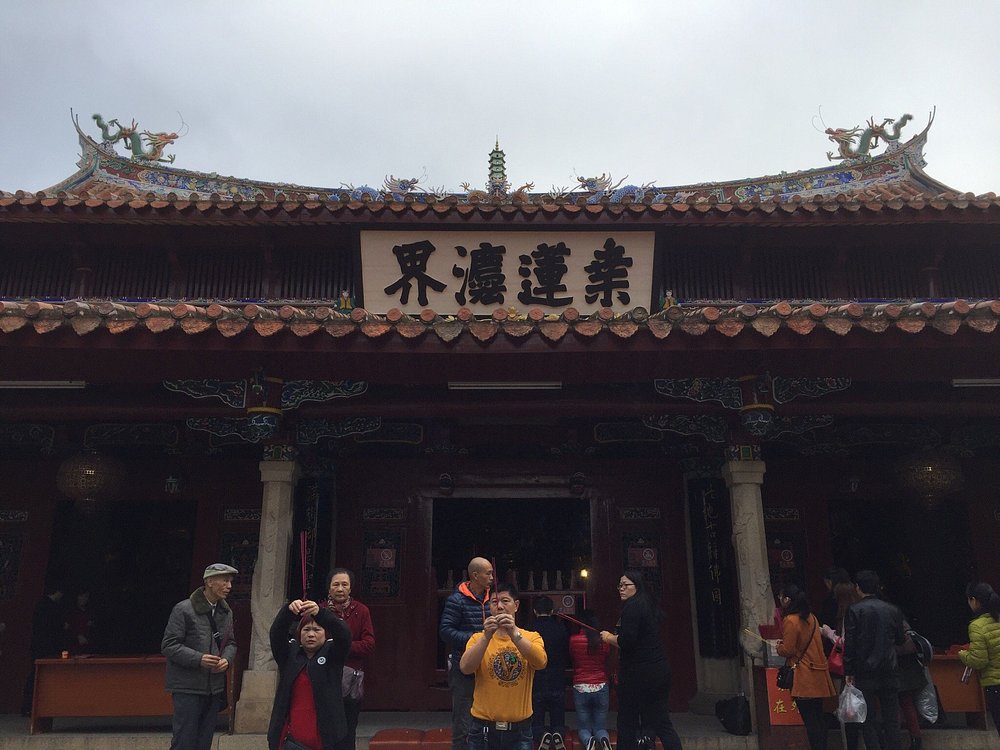
The “Great Hall of Purple Clouds” is an architectural marvel. For visitors on an in-depth Fujian tour, it offers a rare look at how Quanzhou integrated global cultures over 700 years ago.
Buddhist-Catholic Dialogue
Observe the 24 carved “Flying Apsaras” on the crossbeams. Their wings and instruments represent a unique artistic synchronicity between Eastern and Western celestial imagery.
Hindu Influence
Hidden in plain sight are granite pillars depicting scenes from the Hindu epic Ramayana—a testament to the diverse merchants who once called Quanzhou home.
Guardians of the Sky: The Twin Pagodas
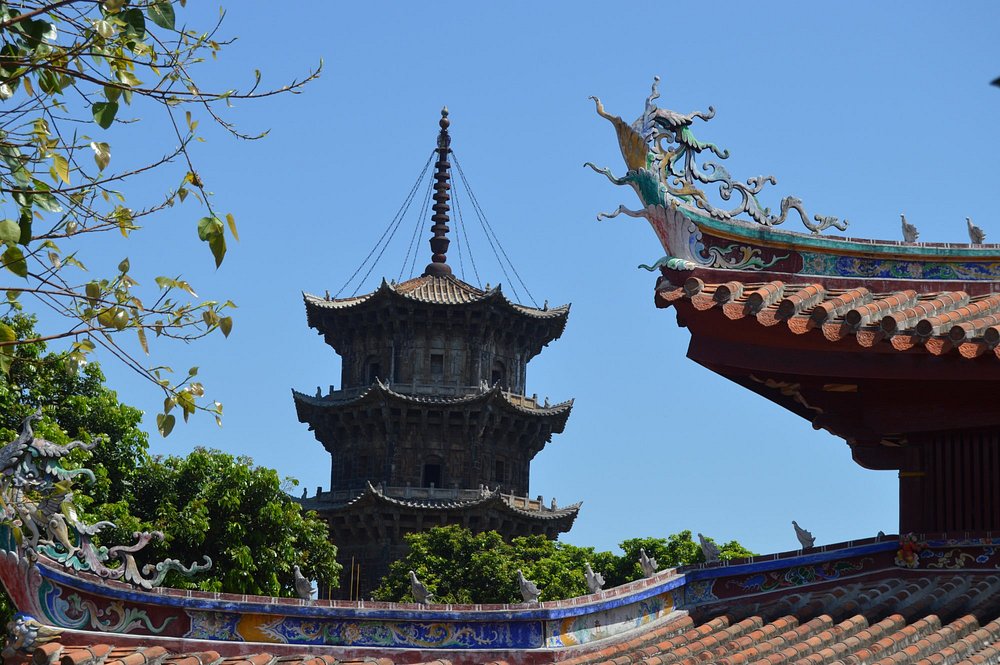
The skyline of Quanzhou is defined by the Twin Stone Pagodas, the tallest pair of stone pagodas in China. They are an essential stop on our Quanzhou one day tour.
Famous for vivid bas-relief carvings of Buddhist figures on its exterior walls.
Known for the detailed “40 Buddhist Stories” inscribed within its inner galleries.
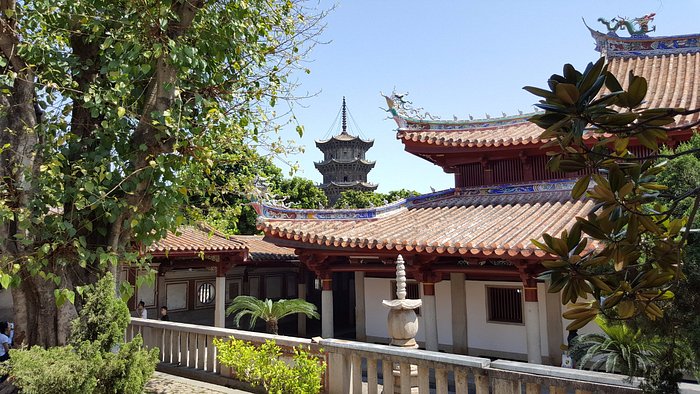
From the courtyard, you can view the surrounding “Red-Tiled Roofs”, a signature style of Minnan architecture that we explore further in our Xiamen Highlights collection.
The Ancient Mulberry Tree
Don’t miss the 1,300-year-old mulberry tree. Legend says it produced lotus flowers, leading to the temple’s founding. It remains a silent witness to the city’s role in the Maritime Silk Road.